
The Evolution of the Portrait
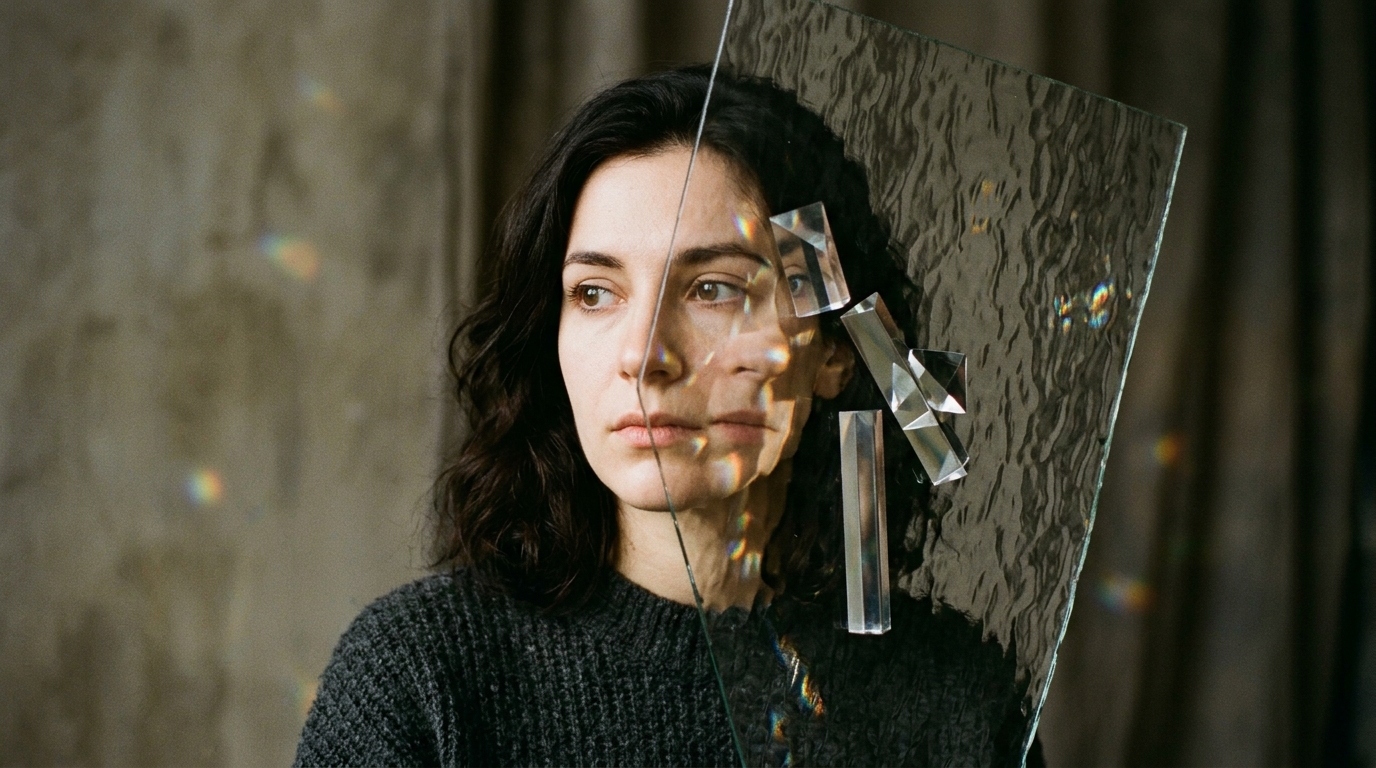
For centuries, the primary goal of portraiture was to capture an accurate physical likeness. It served as a historical record, a symbol of status, and a testament to the subject’s existence. However, the advent of photography and, more recently, digital manipulation has fundamentally altered this objective. Today, we are surrounded by flawless, filtered images that present an idealized version of reality. In response, contemporary artists are turning to distorted portraiture to explore deeper truths.
Rather than pursuing exact replication, artists are intentionally fragmenting, blurring, and distorting the human figure. This deliberate subversion aims to reveal the instability and complexity of contemporary identity. We are living in an age where our digital selves often feel disconnected from our physical realities. Consequently, these distorted images often feel more accurate and resonant than traditional realism.
This movement is not about creating grotesque or shocking imagery for its own sake. Instead, it is a thoughtful visual essay on the psychological effects of a highly curated world. Let us examine how artists are using distortion to navigate the fluid nature of modern identity.
Fragmented Selves in a Digital World
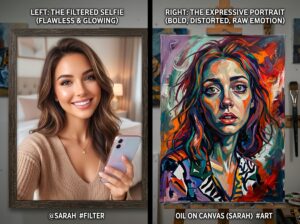
The concept of a singular, unified identity is becoming increasingly obsolete. We maintain different personas across various social media platforms, professional networks, and personal relationships. This fragmentation is a defining characteristic of the digital age. Artists are capturing this reality by literally breaking apart the image of the face and body.
Through techniques like collage, multiple exposures, and digital glitching, creators present subjects that are multifaceted and constantly shifting. These portraits reflect the anxiety and exhaustion that often accompany the need to constantly perform and curate our identities. They ask us to consider what remains when the filters are stripped away.
The Mask and the True Self
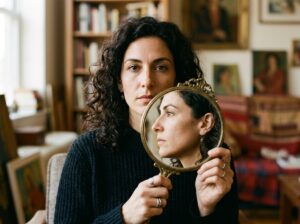
Masking has always been a powerful motif in art, but it has taken on new significance today. In distorted portraiture, the mask is not always a physical object. It can be a blur, a smear of paint, or a digital artifact that obscures the subject’s true features. This obscuration highlights the tension between what we reveal and what we conceal.
By hiding the face, the artist forces the viewer to look for identity in other places—in posture, context, or the surrounding environment. This approach challenges our reliance on facial recognition as the primary marker of who a person is. To see how other artists tackle the concept of identity, explore our art category for further examples.
Psychological Depth Over Physical Likeness
When an artist abandons the need for physical accuracy, they gain the freedom to explore psychological depth. Distorted portraiture allows for the visual representation of internal states—anxiety, joy, trauma, or dissociation. The external form becomes a canvas for the internal experience.
Unnatural colors, exaggerated proportions, and surreal contexts are used to convey emotional truths that cannot be captured by a standard photograph. These portraits demand more from the viewer. They require active interpretation and empathy, rather than passive consumption.
The Rejection of Perfection
Perhaps the most powerful aspect of this movement is its explicit rejection of perfection. In a culture that constantly demands flawlessness, choosing to present the human form as broken, messy, or chaotic is a radical act. It is a rebellion against the algorithms that smooth our skin and narrow our features.
These artists are reclaiming the right to be imperfect. They remind us that our flaws, scars, and inconsistencies are essential parts of our humanity. By celebrating distortion, they are offering a necessary antidote to the toxic positivity of the digital landscape.
The Future of the Face
As artificial intelligence becomes increasingly adept at generating photorealistic human faces, the role of the human artist will continue to shift. The value of a portrait will no longer lie in its ability to mimic reality, but in its capacity to interpret it. Distorted portraiture represents the vanguard of this interpretation.
These works challenge us to look beyond the surface. They ask difficult questions about who we are and how we are changing in response to the technology that surrounds us. They prove that even as our physical forms are digitized and commodified, our internal lives remain complex and unquantifiable.
Embracing the Unresolved
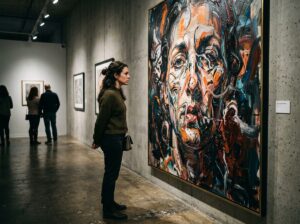
Ultimately, distorted portraiture asks us to become comfortable with ambiguity. It presents us with images that are unresolved and open to multiple interpretations. In doing so, it reflects the true nature of identity itself—something that is never fully fixed, but always in the process of becoming.
The next time you encounter a portrait that seems “wrong” or distorted, resist the urge to look away. Instead, lean in and ask what truth the artist is trying to reveal. You might find that the distortion offers a clearer reflection of our modern reality than any perfect, filtered image ever could.
Conclusion: A Truer Reflection
In the age of filters, distorted portraiture is not a retreat from reality, but a deeper engagement with it. By breaking apart the physical form, artists are piecing together a more accurate picture of our psychological landscape.
These works serve as vital records of how it feels to live in this specific moment in history. They remind us that our identities are complex, fragile, and endlessly fascinating. As we continue to navigate the digital world, these distorted reflections will only become more important.