
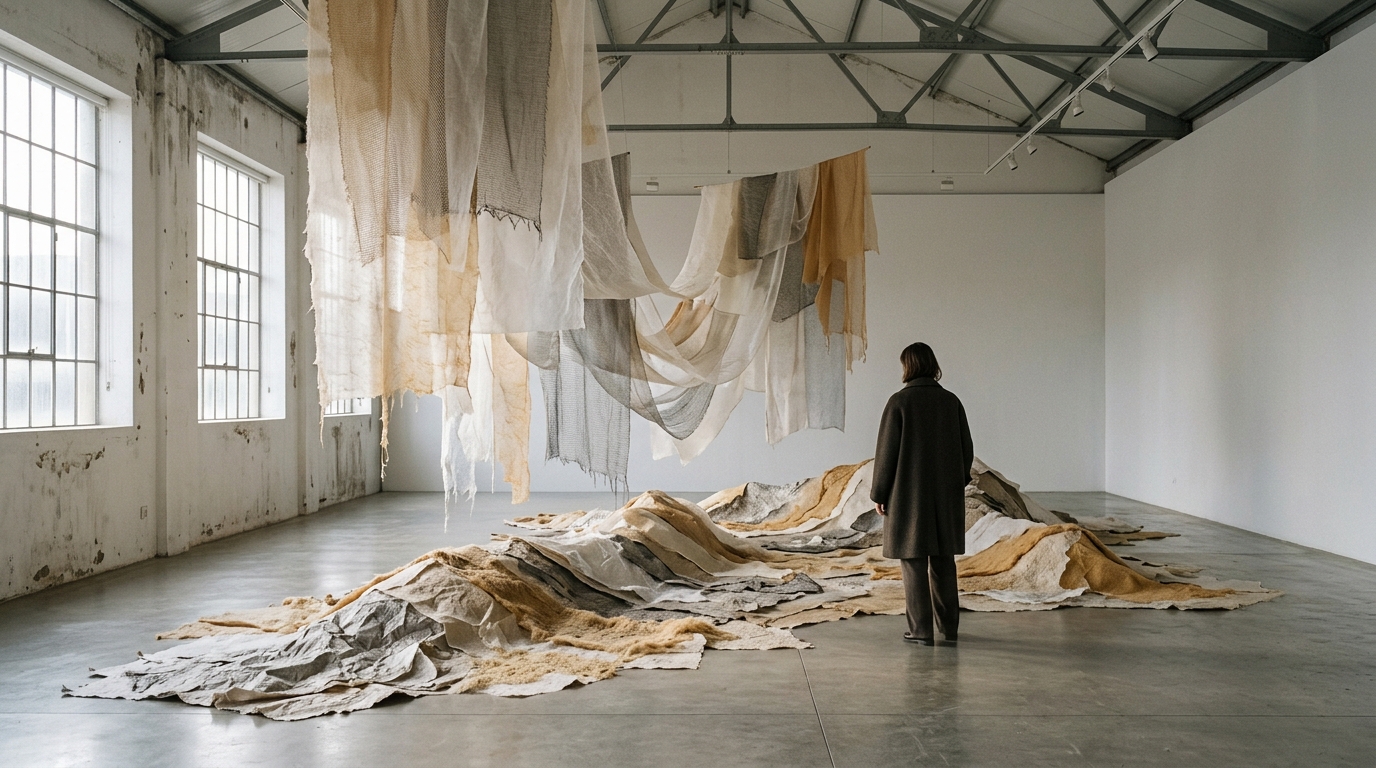
Climate change often reaches us as a stream of figures: degrees of warming, hectares burned, coastlines at risk, species in decline. Those measurements are essential, but they can feel distant from the rooms, streets, shorelines, and memories that make up ordinary life. Climate change art offers another way to pay attention. It cannot replace science or public policy. It can give a large crisis a human scale through image, sound, movement, material, and shared space.
That role is receiving renewed attention. In April 2026, the World Health Organization’s European office published a policy brief based on research, an international expert survey, and case studies. It says arts-based approaches can make climate and health connections more tangible, improve risk communication, and help people process eco-anxiety, trauma, and loss. This does not mean every artwork changes behavior. It means understanding a crisis and feeling able to respond are related, but not identical, tasks.
Why climate change art matters now
Climate change is often described through what may happen in the future. Art can also draw attention to what is changing now and what has already disappeared. A sound work might make a familiar bird call feel newly fragile. A photograph can hold a shoreline in view long enough for viewers to notice what has shifted. A public installation can turn a forecast into a place where people pause and compare what they remember.
Art’s value is more than making information dramatic. Strong work leaves room for complexity. It can hold grief beside beauty, evidence beside uncertainty, and fear beside responsibility. It invites viewers to stay with an uncomfortable subject without suggesting that one emotional encounter is enough to solve it. Climate change art is less a shortcut to an answer than an invitation to look more closely.
From information to encounter
A memorial that keeps changing
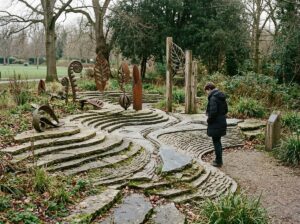
Artist Maya Lin’s What Is Missing? approaches environmental loss through memory. Lin describes a project that exists in several forms, including permanent sculptures, temporary media exhibitions, and a website. It draws attention to species and places that have disappeared or may vanish within a lifetime, while gathering memories and pointing toward conservation work.
The evolving memorial connects what has been lost with what people remember and might still protect. Environmental change is not only a scientific subject. It is also a question of what a community notices, values, and carries forward. A memorial can make those connections visible without claiming that memory alone is a remedy.
A glacier you can touch
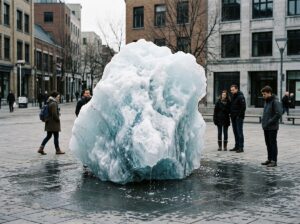
In Ice Watch, artist Olafur Eliasson and geologist Minik Rosing brought twenty-four blocks of ice from Greenland to the public space outside Tate Modern in London. The ice had detached from the ice sheet. Tate’s account explains that visitors could look at it, move around it, and touch it, making a change usually encountered through photographs feel physically present.
The work also raises a question about its own footprint. Tate notes that the energy used to transport one block to London equaled one person’s round-trip flight from London to the Arctic. That tension does not settle whether the work was worthwhile; it asks how art should balance public attention with the resources required to create it.
How artists make environmental change visible
Begin with the memory of a place
Some artists start with a particular landscape and the people who know it well. The subject might be a river that floods differently, a forest changed by fire, or a coastline remembered through family photographs. Local knowledge can reveal changes a broad statistic cannot show by itself. It makes the work specific, connecting environmental pressure with names, histories, livelihoods, and everyday routines.
This approach calls for care. A community should not appear only as a symbol of loss, and an artist should be clear about whose memories are included. Listening, consent, and collaboration can matter as much as the finished image. A work can then register both change and the knowledge people have built by living with a place.
Let materials carry meaning
Material choices can make an artwork’s ideas visible before a viewer reads a wall label. Reused wood, salvaged fabric, soil, sound recordings, or a temporary structure may suggest change, repair, or limits. But no material is automatically sustainable because it looks natural or recycled. Its source, transport, construction, energy use, and afterlife all matter.
Process can therefore be part of the story. An artist might explain why a work is temporary, what happens to its components, or how the team reduced waste. These details help readers see that environmental responsibility can shape not only what an artwork represents, but how it is made.
Invite people into the question
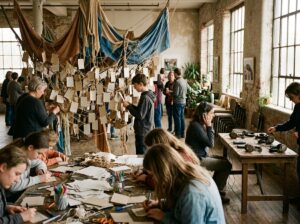
A participatory work can give viewers a role beyond looking. People might contribute a memory, add a sound, walk a route, or respond to a prompt about a shared space. Participation works best when it is meaningful and clearly explained. It should not imply that a small personal action substitutes for institutional responsibility, or ask people to disclose painful experiences simply to make an exhibition more moving.
When participation is thoughtful, an artwork can feel less like a message from an authority and more like a conversation that continues after the visit. A viewer may leave with a question rather than a slogan, especially when personal experience connects with wider evidence and collective choices.
Questions worth bringing to a climate artwork
Viewers can look beyond a dramatic subject by asking a few questions. What evidence or lived experience informs the work? Whose perspective is present, and whose may be missing? Does it connect to a specific place or rely on a generic image of disaster? What does the artist want people to notice or discuss?
It is also fair to ask how the work was made. Did its materials travel a long distance? Is it designed to last, be reused, or disappear? Does the artist acknowledge trade-offs? These questions are not meant to police art into becoming a perfect environmental object. They make the process visible, including contradictions that might otherwise hide behind a powerful image.
Finally, ask what happens after the encounter. Does the exhibition connect visitors with credible information, local groups, or further reading? Not every artwork needs a list of actions, but a path from attention to understanding can help the experience stay with viewers.
Looking more slowly
Climate change art gives people different ways to notice change: through the body, through memory, through an artist’s material choices, and through the presence of others. It cannot replace scientific knowledge, policy, or the work of communities facing environmental harm. Its contribution is distinct. At its best, it makes a difficult subject more particular and gives viewers time to meet it with curiosity rather than glance past it.
That slower attention is part of INJRA’s interest in how art carries memory, grief, hope, and belonging. Continue with the existing story on memory and belonging in personal narratives, or explore more work in the INJRA art archive. A climate artwork may begin with loss, but it can also open space for remembering what matters, asking better questions, and imagining how a different future might feel.